

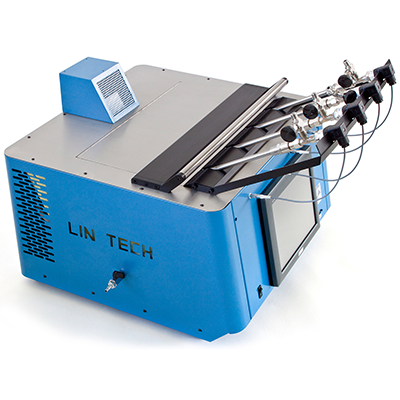
The OilLab 570 Oxidation Stability by Pressure Vessel is a high-performance laboratory instrument designed for evaluating the oxidation stability of lubricants, turbine oils, insulating oils, and automotive engine oils. Fully compliant with ASTM D2112, ASTM D2272, ASTM D4742, ASTM D7098, and IP 229, this system provides precise and reliable results using the Rotating Pressure Vessel Oxidation Test (RPVOT) and Thin-Film Oxygen Uptake (TFOUT) methods.
Engineered for petroleum laboratories, refineries, and research centers, the OilLab 570 enables simultaneous testing across multiple positions, ensuring both productivity and compliance with international testing standards.
Key Standards Covered
• ASTM D2112: Oxidation stability of inhibited mineral insulating oils by pressure vessel
• ASTM D2272 (RBOT): Oxidation stability of turbine oils in the presence of water and a copper catalyst
• ASTM D4742 (TFOUT): Oxidation stability of gasoline engine oils under simulated engine conditions
• ASTM D7098: Oxidation stability of lubricants by TFOUT Catalyst B
• IP 229: Relative oxidation stability of mineral turbine oils by rotating bomb
OilLab 570-SA Features
• High-capacity stainless steel bath: 40 L with lateral drain valve for easy emptying
• Temperature control: Ambient to +199°C, accuracy ±0.1°C, uniform heating via motorized stirring system
• Four testing positions: Vessel rotation at 100 rpm with 30° angle support, independent motor control, and speed calibration per ASTM specifications
• Durable construction: Compact design with anti-acid epoxy coating and stainless steel top cover with heat-resistant handle
• Touchscreen control panel:
o 12” TFT/LCD with intuitive Windows-based software
o Real-time monitoring of pressure (bar/psi / kPa) and temperature (°C / °F)
o Over-temperature safety alarm with PT100 Class A sensor
• Data management:
o Store and monitor up to 60,000+ analyses
o Export results in XLS and JPG formats
o Create detailed pressure-time graphs
• Pre-programmed methods: 12, 24, 48, 96, and 192-hour oxidation stability tests
Benefits
• Ensures reliable evaluation of lubricant oxidation stability for quality control
• Compliant with multiple ASTM and IP international standards
• Supports both new and in-service oil testing for predictive maintenance
• Enhances laboratory efficiency with multi-position automated testing
• Advanced data storage and export options for traceable reporting