

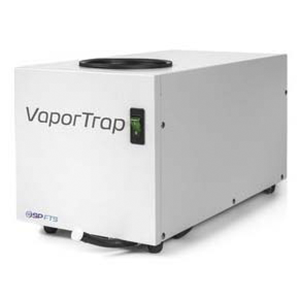
Efficient Vapor Trapping for Laboratory and Industrial Applications
Protect your vacuum pumps and optimize your lab workflows with the FTS Vapor Trap – Refrigerated Vacuum Cold Trap. This mechanically refrigerated system efficiently captures harmful vapors without the need for expendable refrigerants. The stainless-steel Dewar with direct expansion refrigeration ensures reliable vapor trapping at -50°C or -90°C, safeguarding your equipment and reducing downtime.
Ideal for laboratories, universities, and industrial processes, this refrigerated cold trap offers compact design, flexible capacity, and user-friendly digital controls for seamless integration into your vacuum systems.
Key Features & Benefits
❄ Mechanical Refrigeration – No Dry Ice or Liquid Nitrogen
Eliminate hazardous, costly expendable refrigerants while protecting vacuum pumps from damaging vapors.
❄ Flexible Temperature & Capacity Options
Choose -50°C or -90°C trapping temperatures with 2 L, 4 L, or 8 L capacity, adaptable to your research or industrial requirements.
❄ Compact Benchtop Design
Save valuable laboratory space without sacrificing performance.
❄ Efficient Cooling
Direct expansion of refrigerant in lines bonded to the chamber walls ensures rapid and consistent vapor condensation.
❄ Easy-to-Use Digital Controls
One-touch digital temperature readout and operation simplify setup and monitoring.
Applications
-
Vacuum Pump Protection
-
Cold Trap Systems
-
Vacuum Oven Operations
-
Parylene Coating Processes
Industries Served
-
Pharmaceutical Laboratories
-
Vacuum Pump Manufacturers
-
Chemical & Petrochemical Industry
-
University Chemistry & Biology Labs
Why Choose the FTS Vapor Trap?
The FTS Refrigerated Vacuum Cold Trap provides safe, efficient, and cost-effective vapor trapping for laboratories and industrial processes. Mechanical refrigeration, compact design, and flexible capacity make it the ideal solution for protecting vacuum pumps and maintaining reliable operations in research and production environments.